Showing posts with label cars. Show all posts

Saturday, August 13, 2011

2011 Chevrolet Caprice Police Patrol Vehicle

Chevrolet Caprice Police Patrol VehicleAn all-new Chevrolet Caprice Police Patrol Vehicle (PPV) will join the ranks of law enforcement departments across North America in 2011. It's a modern, full-size, rear-drive sedan that will offer both V-8 and V-6 engines, as well as a host of specialized equipment and features.
Chevrolet Caprice Police Patrol Vehicle - Front Angle, 2011, 800x600, 1 of 33
Chevrolet made the announcement at the annual International Association of Chiefs of Police convention, in Denver, Colorado. The Chevrolet Caprice PPV will be available for ordering next year and will hit the streets in early 2011.

"The new Chevrolet Caprice police car is the right tool at the right time for law enforcement," said Jim Campbell, general manager for GM Fleet and Commercial Operations. "We asked for a lot of feedback from our police customers, which helped us develop a vehicle that is superior to the Crown Victoria in key areas."
Vice President, Global Chevrolet Brand Brent Dewar added, "Along with Impala and Tahoe, the Caprice Police Patrol Vehicle gives agencies a greater range of choices for police and special service vehicles that are all available from Chevrolet."
Unlike other police cars on the market, the Chevrolet Caprice PPV is not based on existing "civilian" passenger-car model sold in North America. It has been developed in key areas specifically for police duty, containing modern equipment and features:

Powerful 6.0L V-8 with fuel-saving Active Fuel Management technology and E85 capability delivers expected best-in-class 0-60 acceleration (sub six seconds) and top speed; a V-6 engine will also be offered, beginning in the 2012 model year
Optional front-seat-only side curtain air bags allows a full-width rear-seat barrier for greater officer safety
Two trunk-mounted batteries, with one of them dedicated to powering various police equipment
Designed for five-passenger seating, meaning the upper-center section of the dashboard can be used for equipment mounting without the concern of air bag deployment interference
Compatibility with in-dash touch-screen computer technology
Special front seats designed for the long-term comfort of officers whose car is their effective office, including space that accommodates the bulk of a typical equipment belt


Chevrolet Caprice Police Patrol Vehicle - Front Angle, 2011, 800x600, 5 of 33

The front seats are sculpted to "pocket" the equipment belt, which greatly increases the comfort for a great range of police officer sizes. The foam density of the seatback and cushion insert surfaces are designed to conform to the shape of an equipment belt's various items, too, allowing the officer's back to rest properly on the seatback surface.
"The Chevrolet Caprice Police Patrol Vehicle's seats represent a revolution in comfort and utility for officers who spend long hours in their car," said Bob Demick, lead seat design manager. "The shape also enhances entry and egress, making it easier for officers to exit the vehicle quickly. The seatback bolsters, for example, have been purposefully contoured to help pocket the equipment on the belt, which includes the gun, Taser and handcuffs, which rest comfortably in the sculpted lower bolsters. That also increases the longevity of the trim cover surface."
Along with comfort, the materials used in the seats were also carefully selected. High-wear materials were chosen to stand up to long hours of everyday use, while breathability, long-term durability and ease of cleaning were also important criteria.
Engineers worked on several iterations of the seat, testing a couple of versions in the field to get real-world feedback from police officers, who used prototype seats in their cruisers for a month. Their input helped determine the final design.
Class-leading space
The Chevrolet Caprice PPV is based on GM's global rear-drive family of vehicles that also underpins the Chevy Camaro. It uses the longest wheelbase of the architecture - 118.5 inches (3,010 mm) - along with a four-wheel independent suspension that delivers responsive high-performance driving characteristics that are crucial in some police scenarios.
Chevrolet Caprice Police Patrol Vehicle's long wheelbase also contributes to exceptional spaciousness. Compared to the primary competition, its advantages include:

A larger interior volume - 112 cubic feet / 3,172 liters - than the Ford Crown Victoria, including nearly 4 inches (101 mm) more rear legroom
The barrier between the front seat and rear seat is positioned farther rearward, allowing for full front-seat travel and greater recline for officer comfort
At 18 cubic feet (535 liters) free space (beyond battery located in trunk), the Caprice's trunk volume is large enough to accommodate a full-size spare tire under a flat load surface in the trunk storage area. The Chevrolet Caprice's 6.0-liter V-8 is rated at an estimated 355 horsepower (265 kW) with an estimated 384 lb-ft of torque. It is backed by a six-speed automatic transmission that is performance-calibrated for police duty. Additional, police car-specific powertrain and vehicle system features include:

  • High-output alternator

  • Engine oil, transmission and power steering coolers

  • Standard 18-inch steel wheels with bolt-on center caps

  • Large, four-wheel disc brakes with heavy-duty brake pads

  • Heavy-duty suspension components

  • Police-calibrated stability control system

Driver information center in the instrument cluster with selectable speed tracking feature. A host of complementary features are also offered, including special equipment packages such as spotlights; lockouts for the power windows and locks; and an "undercover" street-appearance package (9C3).
To enable more room for interior equipment, the standard radio can be relocated to the trunk, allowing for an in-dash, touch-screen computer to be used.


Source : Netcarshow.com

Wednesday, August 10, 2011

Audi Urban Concept - Auto Shows


Audi is to be commended for avoiding the use of the word “mobility” in describing the Frankfurt-bound Urban concept. That oft-employed term has a way of reducing motoring to a means of getting from place to place, something with which the final portion of this publication’s title conflicts. Audi’s latest future-car vision promises to continue to involve the driver in the process, but do it in a smaller, lighter, more maneuverable way. And it’s electric, of course.Audi Urban conceptAudi bills the Urban concept as “a completely new kind of concept car,” but it brings to mind other hyper-efficient VW pods from the recent past, namely the Up!, as well as the L1 and XL1 “1-Liter” cars. Those and the Messerschmitt KR200.
In this Audi, two passengers sit in a fighter-jet-looking cockpit, complete with a rollback canopy in place of doors. The chassis is made of carbon fiber, into which the seat buckets are molded; the steering wheel and pedals adjust to the driver. The seats are staggered, as in the XL1, to afford a little more shoulder room in the narrow vehicle. Twenty-one inch wheels stick out from the body and are covered by cycle fenders with built-in LEDs.


Audi Urban concept

Unlike the turbo-diesel 1-Liter concepts, the Urban deals in Audi’s not-yet-realized electric promise. The vehicle itself isn’t billed as an e-tron (it doesn’t quite have the stun factor of the early e-tron concepts), but it does employ two electric motors that carry that branding. A lithium-ion battery pack serves as the power supply.

Audi Urban concept
While we like what we hear so far, we haven’t been told too much about this concept. Audi will wait until the Frankfurt show in September to fully unveil the car and share more details. Here’s hoping the “M-word” doesn’t come up at the press conference. Source : Caranddriver.com

Tuesday, August 9, 2011

2011 Lexus ES 350 Touring Edition


It takes about seven hours to drive from Ottawa, Ontario to the Holland Tunnel, the entrance way to lower Manhattan from New Jersey. And even though the portable navigation system tells us that our hotel is just seven minutes away, the truth is it will take more than an hour to inch ever so slowly toward the nine toll booths where several highways and city streets converge into two lanes of bumper to bumper traffic.
2011 Lexus ES 350 Touring Edition

It is nice to have a comfortable car to drive the 725 kilometres from Ottawa to lower Manhattan, but the benefits of this comfort are driven home when after seven hours of smooth cruising you come to an abrupt halt several miles from the entrance to the tunnel.
But while the heat and the congestion are getting to some of the drivers trapped in the line-up to the tunnel – the muffled sound of horns nearby is one clue – inside the 2011 Lexus ES 350, all is peaceful and quiet. Soft tunes from the XM satellite radio calm the nerves while soft leather soothes a tired posterior. It takes patience, this inching forward, and the Lexus encourages patience.


2011 Lexus ES 350 Touring Edition
Re-designed for 2007 and updated in 2010 with interior improvements and an exterior facelift – new headlamps and tail lights, fog lights, grille, front bumper, wheels, chrome body side mouldings, and mirrors with integrated turn signals – the current generation of the ES 350 (its 5th) is nearing the end of its run. It is likely that a new ES 350 will follow the introduction of the redesigned 2012 Toyota Camry, on which it is based, in either 2012 or 2013.
It would be wrong to characterize the ES 350 as a duded-up Camry. It is much more substantial than that, with the unmistakable look of Lexus, a more well-appointed interior and a solid, smooth ride. Pulling up to the front door of our New York hotel in the Obsidian ES 350, it seems the porters run faster than they would if this was merely a black Camry.
While sharing components increases production efficiency, the two cars are not even built in the same plant – the Camry is built in Georgetown, Kentucky, while the ES 350 is built at Lexus’ Kyushu, Japan facility.
Standard equipment is more in line with what one would expect in a luxury vehicle, at least one that is more or less the entry into the world of Lexus luxury. Standard equipment includes Lexus premium audio system with AM/FM/CD/MP3/WMA, satellite radio, six-disc changer and eight speakers, dual zone climate control, leather upholstery with heated 10-way power adjustable driver’s and passenger seats, smart key with push-button start, and power locks and all windows with one-touch up and down. Amenities such as Bluetooth connectivity, dual illuminated sun visors, auto-dimming rear-view mirror with compass and auto-dimming side mirrors, two-position memory that links both seats and mirrors, power tilt and telescoping, leather wrapped steering wheel, power moonroof and wood grain trim are all standard. Outside, 17-inch aluminum alloy wheels, fog lights and rain sensing windshield wipers are all standard.


Our test car was a new for 2011 Touring Edition which, for $500 over the base price of $42,150, added premium alloy wheels, rear spoiler and high intensity discharge (HID) headlights with adaptive front lighting system that automatically swivels the lights in the direction of the front wheels, which enhances visibility during night driving.
2011 Lexus ES 350 Touring Edition
Of course, you can get more stuff if you want it: a Navigation Package adds voice-activated navigation, a console screen, back-up camera and ventilated seats; a Premium Package further adds a back-up sensor, power rear window sunshade, wood steering wheel and shift knob and passenger seat memory, and; an Ultra-Premium Package, which takes the price up to $52,200, completes the luxury equipment with the Mark Levinson 14-speaker audio system, panoramic glass roof, premium leather seats and power variable cushion length on the driver’s seat.

It takes about seven hours to drive from Ottawa, Ontario to the Holland Tunnel, the entrance way to lower Manhattan from New Jersey. And even though the portable navigation system tells us that our hotel is just seven minutes away, the truth is it will take more than an hour to inch ever so slowly toward the nine toll booths where several highways and city streets converge into two lanes of bumper to bumper traffic.
It is nice to have a comfortable car to drive the 725 kilometres from Ottawa to lower Manhattan, but the benefits of this comfort are driven home when after seven hours of smooth cruising you come to an abrupt halt several miles from the entrance to the tunnel.
But while the heat and the congestion are getting to some of the drivers trapped in the line-up to the tunnel – the muffled sound of horns nearby is one clue – inside the 2011 Lexus ES 350, all is peaceful and quiet. Soft tunes from the XM satellite radio calm the nerves while soft leather soothes a tired posterior. It takes patience, this inching forward, and the Lexus encourages patience.


Test Drive: 2011 Lexus ES 350 Touring Edition lexus
Re-designed for 2007 and updated in 2010 with interior improvements and an exterior facelift – new headlamps and tail lights, fog lights, grille, front bumper, wheels, chrome body side mouldings, and mirrors with integrated turn signals – the current generation of the ES 350 (its 5th) is nearing the end of its run. It is likely that a new ES 350 will follow the introduction of the redesigned 2012 Toyota Camry, on which it is based, in either 2012 or 2013.
It would be wrong to characterize the ES 350 as a duded-up Camry. It is much more substantial than that, with the unmistakable look of Lexus, a more well-appointed interior and a solid, smooth ride. Pulling up to the front door of our New York hotel in the Obsidian ES 350, it seems the porters run faster than they would if this was merely a black Camry.
While sharing components increases production efficiency, the two cars are not even built in the same plant – the Camry is built in Georgetown, Kentucky, while the ES 350 is built at Lexus’ Kyushu, Japan facility.
Standard equipment is more in line with what one would expect in a luxury vehicle, at least one that is more or less the entry into the world of Lexus luxury. Standard equipment includes Lexus premium audio system with AM/FM/CD/MP3/WMA, satellite radio, six-disc changer and eight speakers, dual zone climate control, leather upholstery with heated 10-way power adjustable driver’s and passenger seats, smart key with push-button start, and power locks and all windows with one-touch up and down. Amenities such as Bluetooth connectivity, dual illuminated sun visors, auto-dimming rear-view mirror with compass and auto-dimming side mirrors, two-position memory that links both seats and mirrors, power tilt and telescoping, leather wrapped steering wheel, power moonroof and wood grain trim are all standard. Outside, 17-inch aluminum alloy wheels, fog lights and rain sensing windshield wipers are all standard.


Our test car was a new for 2011 Touring Edition which, for $500 over the base price of $42,150, added premium alloy wheels, rear spoiler and high intensity discharge (HID) headlights with adaptive front lighting system that automatically swivels the lights in the direction of the front wheels, which enhances visibility during night driving.
Of course, you can get more stuff if you want it: a Navigation Package adds voice-activated navigation, a console screen, back-up camera and ventilated seats; a Premium Package further adds a back-up sensor, power rear window sunshade, wood steering wheel and shift knob and passenger seat memory, and; an Ultra-Premium Package, which takes the price up to $52,200, completes the luxury equipment with the Mark Levinson 14-speaker audio system, panoramic glass roof, premium leather seats and power variable cushion length on the driver’s seat.
It takes about seven hours to drive from Ottawa, Ontario to the Holland Tunnel, the entrance way to lower Manhattan from New Jersey. And even though the portable navigation system tells us that our hotel is just seven minutes away, the truth is it will take more than an hour to inch ever so slowly toward the nine toll booths where several highways and city streets converge into two lanes of bumper to bumper traffic.
It is nice to have a comfortable car to drive the 725 kilometres from Ottawa to lower Manhattan, but the benefits of this comfort are driven home when after seven hours of smooth cruising you come to an abrupt halt several miles from the entrance to the tunnel.
But while the heat and the congestion are getting to some of the drivers trapped in the line-up to the tunnel – the muffled sound of horns nearby is one clue – inside the 2011 Lexus ES 350, all is peaceful and quiet. Soft tunes from the XM satellite radio calm the nerves while soft leather soothes a tired posterior. It takes patience, this inching forward, and the Lexus encourages patience.


Test Drive: 2011 Lexus ES 350 Touring Edition lexus
Re-designed for 2007 and updated in 2010 with interior improvements and an exterior facelift – new headlamps and tail lights, fog lights, grille, front bumper, wheels, chrome body side mouldings, and mirrors with integrated turn signals – the current generation of the ES 350 (its 5th) is nearing the end of its run. It is likely that a new ES 350 will follow the introduction of the redesigned 2012 Toyota Camry, on which it is based, in either 2012 or 2013.
It would be wrong to characterize the ES 350 as a duded-up Camry. It is much more substantial than that, with the unmistakable look of Lexus, a more well-appointed interior and a solid, smooth ride. Pulling up to the front door of our New York hotel in the Obsidian ES 350, it seems the porters run faster than they would if this was merely a black Camry.
While sharing components increases production efficiency, the two cars are not even built in the same plant – the Camry is built in Georgetown, Kentucky, while the ES 350 is built at Lexus’ Kyushu, Japan facility.
Standard equipment is more in line with what one would expect in a luxury vehicle, at least one that is more or less the entry into the world of Lexus luxury. Standard equipment includes Lexus premium audio system with AM/FM/CD/MP3/WMA, satellite radio, six-disc changer and eight speakers, dual zone climate control, leather upholstery with heated 10-way power adjustable driver’s and passenger seats, smart key with push-button start, and power locks and all windows with one-touch up and down. Amenities such as Bluetooth connectivity, dual illuminated sun visors, auto-dimming rear-view mirror with compass and auto-dimming side mirrors, two-position memory that links both seats and mirrors, power tilt and telescoping, leather wrapped steering wheel, power moonroof and wood grain trim are all standard. Outside, 17-inch aluminum alloy wheels, fog lights and rain sensing windshield wipers are all standard.


Our test car was a new for 2011 Touring Edition which, for $500 over the base price of $42,150, added premium alloy wheels, rear spoiler and high intensity discharge (HID) headlights with adaptive front lighting system that automatically swivels the lights in the direction of the front wheels, which enhances visibility during night driving.
Of course, you can get more stuff if you want it: a Navigation Package adds voice-activated navigation, a console screen, back-up camera and ventilated seats; a Premium Package further adds a back-up sensor, power rear window sunshade, wood steering wheel and shift knob and passenger seat memory, and; an Ultra-Premium Package, which takes the price up to $52,200, completes the luxury equipment with the Mark Levinson 14-speaker audio system, panoramic glass roof, premium leather seats and power variable cushion length on the driver’s seat.
A built-in navigation system would have been nice to have with our Touring Edition ES 350, but a portable navigation system worked fine for the trip to New York.


Test Drive: 2011 Lexus ES 350 Touring Edition lexus
The ES 350 derives its model name from its 3.5-litre V6 engine. It is an aluminum block, 24-valve, double-overhead cam engine with electronic throttle that produces 268 horsepower and 248 lb.-ft. of torque. This is less power than the 3.5-litre of previous years (272/254), but the 2011 ES 350 can now run on regular unleaded fuel rather than premium – a big saving and most people wouldn’t really notice any difference in power.
Fuel consumption is pretty good for a big car. Energuide rates the ES 350 for 2011 at 10.9 L/100 km in the city and 7.2 L/100 km on the highway. For our trip to New York City and back, we recorded an average of 7.9 L/100 km, all highway except for the hour and a half sitting in traffic waiting to access the Holland Tunnel and drive to the hotel off Canal Street. An “Eco indicator” light on the dash helps you maintain efficiency to save fuel.
The Lexus ES 350 is not a sport sedan, but more of a comfort sedan with a luxury road feel. Its MacPherson strut suspension, front and rear, soaks up pot holes, cracks and other road hazards. It’s smooth cruising all the way in the ES 350, no matter how badly the road has deteriorated. Slightly over-boosted power steering also contributes to a sense of isolation from the road. It’s perfect for highway driving and around town and parking lot tours, but might leave some drivers feeling disconnected.
The 3.5-litre engine provides plenty of power and moves the car along just fine. Combined with the six-speed automatic Super Electronically Controlled (Super ECT) transmission, the engine is quiet and unobtrusive unless, that is you step down hard on the accelerator and force the transmission to downshift. Then it comes alive, providing decent acceleration, but with an unexpected and disconcerting racket. The transmission will, under most circumstances, hold the car in top gear, allowing the engine’s torque to do the work.


Test Drive: 2011 Lexus ES 350 Touring Edition lexus
2011 Lexus ES 350 Touring Edition. Click image to enlarge
Soft, comfortable leather seats contribute to the calm, quiet atmosphere of the cabin and the overall ride comfort and with 10-way adjustment and power adjustable steering wheel it is not difficult to find the perfect driving position. When the ES 350 was updated in 2010, Lexus added console capacity and storage, giving plenty of room for all the little things one needs on a long drive.
Rear seat legroom is excellent and the rear passenger seats are as comfortable as those up front. Trunk space is plentiful as well. With 416 litres (14.7 cu. ft.) of space, there was more than enough room for luggage for four plus a cooler.
On the negative side, the dash design and gauge package, despite being easy to read, are very plain and look somewhat dated. I would expect this is one area that will be addressed when the ES 350 moves into a sixth generation. As well, fit and finish was not up to the level of perfection expected from Lexus; for example, the console insert on our test vehicle was not perfectly aligned with the surrounding material, overlapped on one side, leaving a gap on the other.
People who use their car a lot will appreciate the comfort and serenity of the Lexus ES 350. If long distance travel is a part of your routine, an ES 350 can mean getting to where you are going in decent physical and mental condition. It is a car that coddles you rather than beats you up. And for people who are often travelling with clients, the ES 350 sends the right kind of message; it tells clients you are successful, but not wasteful.
After a long day of driving through New York, Pennsylvania, New Jersey and finally New York again only to get stuck in a classic New York City traffic jam, I was glad that I was behind the wheel of a Lexus ES 350. Thanks to the car, I was in the right frame of mind to handle it. Eventually, we made our way into the tunnel. It just took patience; and the 2011 Lexus ES 350 encourages patience.
Pricing: 2011 Lexus ES 350 Touring Edition


  • Base price: $42,650


  • Options: None


  • A/C tax: $100


  • Freight: $1,895


  • Price as tested: $44,645 


  • Source : Autos.ca

    Thursday, August 4, 2011

    2011 Nissan 370Z Nismo - Test Drive

    Read about the Autos.ca Test Drive:  2011 Nissan 370Z Nismo


     A lot has happened since Datsun turned the sports car world on its ear with the 1970 240Z. This stylish, attractively priced and capable two-seat coupe packing a sweet straight-six under its long bonnet was a Jaguar E-Type for the masses, and a great success.
    In the early eighties, Nissan ditched the Datsun nameplate, the Z-car grew soft and bloated, found some of its former glory in 1984 with the 300ZX, left North America in 1996, then returned with a vengeance in 2003 with the 350Z.
    2011 Nissan 370Z Nismo


    For 2009, Nissan gave us an all-new Z that stuck even closer to the original script. It was lighter, lower, wider, and with a wheelbase shortened by 100 mm, it packed 332 horsepower and 270 lb.-ft. from its 3.7-litre V6.


    And now, another Z milestone: Canada gets the Nismo for
    2011. Developed by Nissan Motorsports (NISMO) in conjunction with partner Autech Japan, this is the first Nismo to migrate north of the 49th Parallel, having been available in the U.S. since 2007. It arrives in six-speed-manual-only guise with a price tag of $46,898 – a $6,000 hit over the standard issue 370Z.
    So what is a Nismo? For those hip to the Nissan 370Z Coupe’s brand of tough-guy/sophisticate performance, this hyper version delivers more of the same. It’s loud, raucous, looks super nasty and dishes out rear-drive sport car thrills by the bucket full.
    That said, if you are at all interested in, oh, maybe relaxing for a moment behind the wheel while enjoying GT cruise mode, the Nismo is probably not for you. This sports car demands your attention at all times. Looking for the Nismo’s feminine side is an exercise in futility.
    Distinguishing Nismo visuals include a rear deck spoiler, sill extensions, reworked rear fascia and an aggressive snout that adds 16.5 centimetres to the Z’s length. A word of caution – that chin-spoiler sits perilously close to the pavement.


    The lightweight forged 19-inch alloys (wearing 245/40R front and 285/35R rear performance tires) allow a nice view of the Nismo Sport Brakes featuring 14.0-inch front and 13.8-inch rear vented discs squeezed respectively by four-piston and two-piston aluminum calipers.
    2011 Nissan 370Z Nismo
    My tester was finished in Nismo-exclusive Airstream Silver, and yes, it was a head-turner. At $135, the metallic paint was the only option here. Other available shades are Hakone White, Magnetic Black, Solid Red and Gun Metallic.
    This is the most powerful production Z ever offered, getting a version of Nissan’s ubiquitous 3.7-litre DOHC V6 that makes 350 hp and 276 lb.-ft. (up 18 hp and eight lb.-ft.). The power increase comes from a freer-flowing exhaust system and reprogrammed engine management.
    Rounding out the Nismo-specific kit is a specially tuned suspension with stiffer springs, dampers and anti-roll bars. A rear limited-slip differential comes standard.
    The cabin gets grippy and supportive two-tone fabric seats (eight-way driver, four-way passenger), a leather wrapped wheel, automatic climate control, four-speaker audio with aux input (no USB) and cruise control. A stylistic nod to the original 240Z is a trio of dashtop gauges for temp, oil, battery and clock. The LED information readout to the left of the speedo mars an otherwise well done interior, looking like an incongruous afterthought.Source : Autos.ca
    Tuesday, August 2, 2011

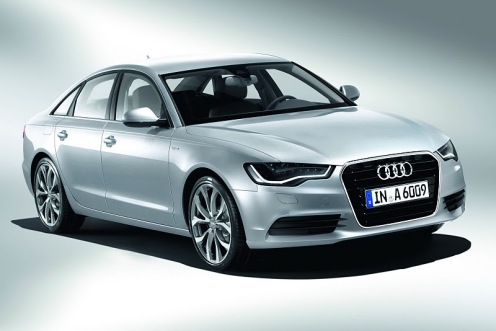
    2012 Audi A6 Hybrid - First Drive Review

    Does driving a hybrid change a person? We’d rather leave that question unanswered, but driving a hybrid does change your driving style. All of a sudden, even the leadfeet around here shift their attention to the energy flow charts blinking in the instrument cluster, we don’t plot to pass every car in sight, and we make real attempts to maximize fuel economy and battery recharging. Well, at least for a few minutes.
    http://autoelements.files.wordpress.com/2011/01/wpid-first-look-2012-audi-a6-hybrid.jpg?w=497
    So it was with this A6, with which Audi is returning to the world of hybridized cars. This writer remembers the presentation of the A4 Avant–based Duo in Berlin some 15 years ago. The diesel/electric A4 Duo hybrid worked well enough, but it lagged far behind Audi’s nonhybrid offerings in overall goodness, and that conspired with a high price to kill it off rather quickly. Expect Audi hybrids to stick around much longer now, though, as the company developed its current gasoline/electric system to work across several vehicle lines. What’s in the A6 is the same powertrain that is offered in the European Q5 hybrid—we’ll get a diesel version of the crossover in lieu of that one—and the forthcoming A8 hybrid’s version of the system won’t vary by much.
    Improvements Rather than Breakthroughs
    The A6 hybrid comes as a sedan only, since markets that favor hybrids and those that favor station wagons seem to be mutually exclusive. The car we drove was European spec, but the hybrid will indeed be offered in the U.S. It will differ only slightly once it goes on sale here in 2012. The powertrain is the same on either continent: a 211-hp, 2.0-liter turbo four-cylinder mated with a 54-hp electric motor. The combined system output is 245 hp. Compared with other hybrid models on the market, the A6 hybrid doesn’t provide major breakthroughs. Its all-electric range is a minimal 1.9 miles at city speeds, but the car can get to 62 mph on battery power alone before the internal-combustion engine kicks in if you treat the accelerator (very) gently. The A6 hybrid feels neither quick nor particularly slow. Audi predicts a run to 60 mph in just over seven seconds, and we figure that’s about right. Audi claims a top speed of 148 mph.


    Power is routed exclusively to the front wheels through an eight-speed automatic. The automatic’s torque converter is replaced by an electric motor, however, and coupling and decoupling of the engine from the drivetrain are mostly—but not always—smooth affairs. The four-banger is audible, but effective sound insulation keeps the noise down. There is no tachometer; it’s been replaced by a "power meter" that shows how much precious electricity you’re discharging (or recouping). As with other hybrids, the batteries—a lithium-ion pack with a capacity of 1.3 kilowatt-hours and a weight of 81 pounds—recharge when you lift off the accelerator and when you lightly apply the brakes, at which point the car uses the electric motor as a generator and to slow the car. The hydraulic braking system is activated only during heavy braking. We found the feel of the regenerative braking to be highly artificial and difficult to modulate. Even when you touch the brake pedal gently, the braking force is relatively strong and appears suddenly, a characteristic we thought had finally been banished from hybriddom.
    Of course, efficiency is the point of this car, and the Audi A6 hybrid is rated to return 37 mpg combined in the optimistic European test cycle. We even managed to get very close to that figure—according to the car’s readout—in real-world conditions, which, we will admit, made us feel like a better person. For a little while, anyway. Then we decided to flog the car like we would a regular A6, at which point we managed to almost halve the car’s indicated mileage.
    The A6 hybrid is considerably heavier than the regular A6—about 200 pounds beefier by our estimation. That weight does make it clumsier than a nonhybrid four-cylinder A6. Although the steering is light and precise, the damping is rather soft, and the tires begin to squeal early. It doesn’t take that much to reach the limits of adhesion in this A6, and the contrast between the A6 hybrid and, say, a conventionally powered A6 with Quattro all-wheel drive is severe. In true hybrid fashion, this Audi doesn’t like to dance. We do, and no matter how many hybrids we drive, that’s never going to change.
    http://www.ecoautoninja.com/wp-content/uploads/2011/01/2012-audi-a6-hybrid.jpg
    Source : Caranddriver.com

    Monday, August 1, 2011

    2012 Mercedes-Benz M-class - First Drive Review


    2012 Mercedes-Benz M-class / ML350 4MATIC / ML350 BlueTec
    Before the recession, Mercedes-Benz had no trouble selling 34,000 MLs in the U.S. each year. For 2011, the company’s best-known SUV is back on track to hit 30,000 sales. Right now, in fact, ML sales are up 14.5 percent. “It puts us in a funny position,” confesses Mercedes U.S.A. president and CEO Ernst Lieb. “We’re spending millions to replace a car that remains a huge profit center.” It’s like replacing Yankee Stadium’s hot dogs with, say, toaster waffles. Are you sure you want to mess with a good thing?
    That’s nonetheless what Mercedes is doing with its third-gen M-class, which, we hasten to add, resembles wieners and waffles only in its ability to cause customers to queue up. The first to arrive is the ML350 4MATIC, powered by a new, direct-injection 3.5-liter gas V-6 producing 302 horsepower (an increase of 34). It will be partnered with the ML350 BlueTec 4MATIC, motivated by a redesigned 3.0-liter V-6 turbo-diesel making 240 horsepower (an increase of 30). Base price for the gas ML is $49,865, and the diesel, now accounting for 13 percent of sales, fetches an additional $1500.
    This new ML is about an inch longer and a half-inch wider, and it squats 0.8-inch lower than before. Cargo capacity behind the rear seat has grown seven cubic feet.
    The baseball bat of a turn-signal/wiper stalk thankfully has been moved to the 10-o’clock position on the steering column, and its cruise-control function has been relegated to a second stalk at 8 o’clock. Unfortunately, you’ll still find yourself flicking at the column-mounted gear selector whenever you desire wipers. It’s annoying.


    On road, we drove a gas-powered ML350 with the Dynamic Handling package. That $5150 option includes the Active Curve System (ACS), which decouples the anti-roll bars both off-road and during straight-ahead freeway slogs. We never felt it coupling or decoupling. We never felt it doing much of anything, to tell the truth, although body motions were satisfactorily controlled in the hills. But body motions were also satisfactorily controlled in a non-ACS ML we sampled, and that one didn’t max out at a cosmically startling $73,055. As the ML negotiates turns, you can still feel huge lateral load transfers, and the seats’ weak bolsters further suggest that this SUV might possess grand ambitions, but handling is not among them.
    We’ll tell you one thing: This new ML is spectacularly quiet, subjectively as quiet as, say, a Lexus LX570, thanks to high-insulation glazing and additional sealing. And the ML pretty much matches the Lexus’s memorably cushy ride, too. Suspension travel feels endless; road nastiness is filtered to a fine fare-thee-well. Unfortunately, highway textures and slip angles are likewise filtered out of the light steering, as if such information might be an affront to the driver. The brake pedal isn’t doing much talking, either. At least interstate tracking is flawless.
    The seven-speed transmission’s upshifts and kickdowns are supremely gentle, and engine roar is reduced to a velvety hum seemingly emanating from an adjacent ZIP Code. Fit and finish are of a quality that should make assembly workers in storm-smacked Tuscaloosa County, Alabama, proud. For two riders, back-seat legroom is excellent, kneeroom superb, headroom vast.


    We nosed an ML350 BlueTec diesel off-road, through sippy holes, bogs, and ugly ruts. Over hill and dirty dale, the long-travel suspension, the silky dampers, and the rock-solid platform conspire to improve the experience. You’ll find that the road-biased M+S rubber, however, is not your ally in the mud. The diesel engine definitely is an ally—it’s among the most velvety oil-burners ever installed in a passenger car. No clatter, no soot, no odor, no tactile evidence to reveal its baser origins. The driver notices only a slightly delayed throttle response, an added half-second of laziness at step-off.
    Eight-cylinder MLs will arrive in the first quarter of 2012. Two-wheel-drive models will follow, as will a more off-road-biased version with a terrain selector and a two-speed transfer case.
    Mercedes says the new ML is only a few pounds heavier than its forebear, but the vehicle feels massive, a little slow-witted, and somewhat resistant to course corrections. If you’re looking for driving gratification or personality, well, it will have to derive from the M-class’s luxurious fittings and from its soothing soundlessness. Ten minutes after climbing out, you’ll remember the awesome stereo more than any dynamic merits. Sometimes progress smells like waffles.


    Specifications

    VEHICLE TYPE: front-engine, 4-wheel-drive, 5-passenger, 5-door wagon

    BASE PRICE: $49,865–$51,365

    ENGINE TYPE: turbocharged and intercooled DOHC 24-valve 3.0-liter diesel V-6, 240 hp, 455 lb-ft; DOHC 24-valve 3.5-liter V-6, 302 hp, 273 lb-ft

    TRANSMISSION: 7-speed automatic with manual shifting mode

    DIMENSIONS:
    Wheelbase: 114.8 in Length: 189.1 in
    Width: 75.8 in Height: 70.7 in
    Curb weight: 4900–5150 lb

    PERFORMANCE (C/D EST):
    Zero to 60 mph: 6.9–7.8 sec
    Standing ¼-mile: 15.2–15.8 sec
    Top speed: 130 mph
    PROJECTED FUEL ECONOMY (MFR'S EST):
    EPA city/highway: 17–20/22–25 mpg
    source : Caranddriver.com

    Friday, July 29, 2011

    Fastest Cars In The World: Top 10 List 2011-2012

    World's Fastest Cars

    While most of us can only dream of owning the fastest car in the world, some will do whatever it takes to possess the most powerful speed. So, how fast are the fastest cars in the world? Here are the 10 fastest cars available on the market (production models, as opposed to concept cars) measured by tested top speed (theoretical speeds do not count).

    1. Bugatti Veyron: 267 mph, 0-60 in 2.5 secs. Aluminum, Narrow Angle 8 Liter W16 Engine with 1200 hp, base price is $1,700,000. The Super Sport version is $2,400,000. The speed was tested again on July 10, 2010 with the new 2010 Super Sport Version: the Bugatti Veyron once again claims the title of the fastest car in the world at 267 mph.

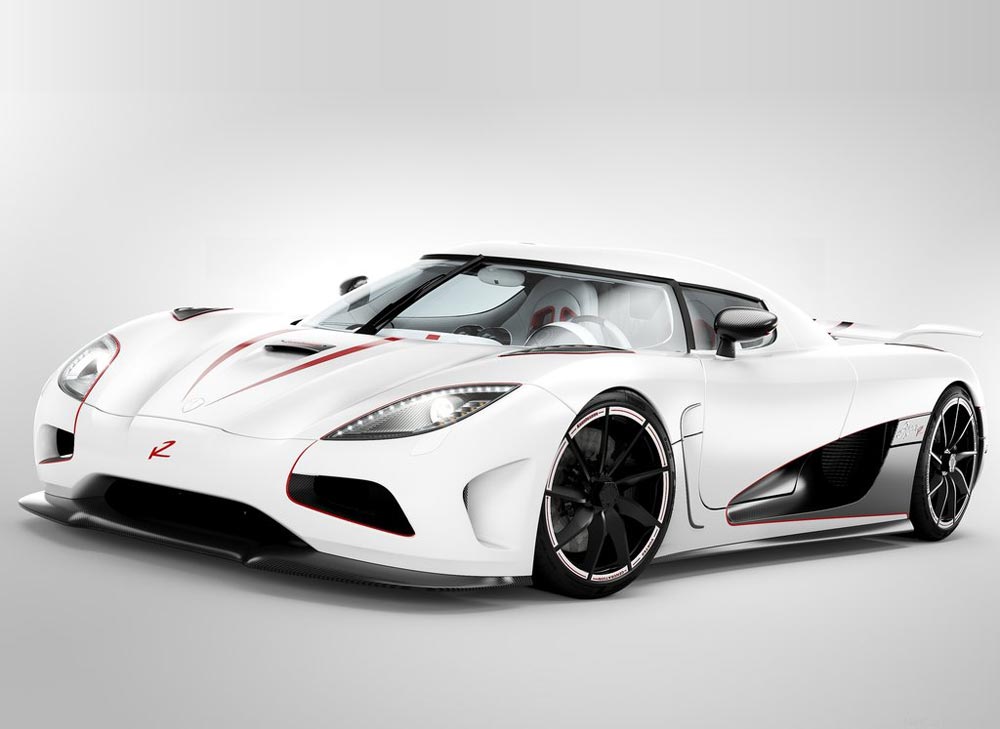
    2. Koenigsegg Agera R: 260 mph, 0-60 in 2.8 secs. 5.0-liter V8 Engine with twin turbo’s, housing 1099 hp. Base price is $1,600,000. If you're into snow sports, the Agera R can be fitted with a Ski Box as well as winter tires, not that I would take one on a ski trip or anything like that. While the Agera R has a massive theoretical top speed, the current tested top speed is 260 mph. Expect this snow car to be the Bugatti's arch enemy for the next 5 years.
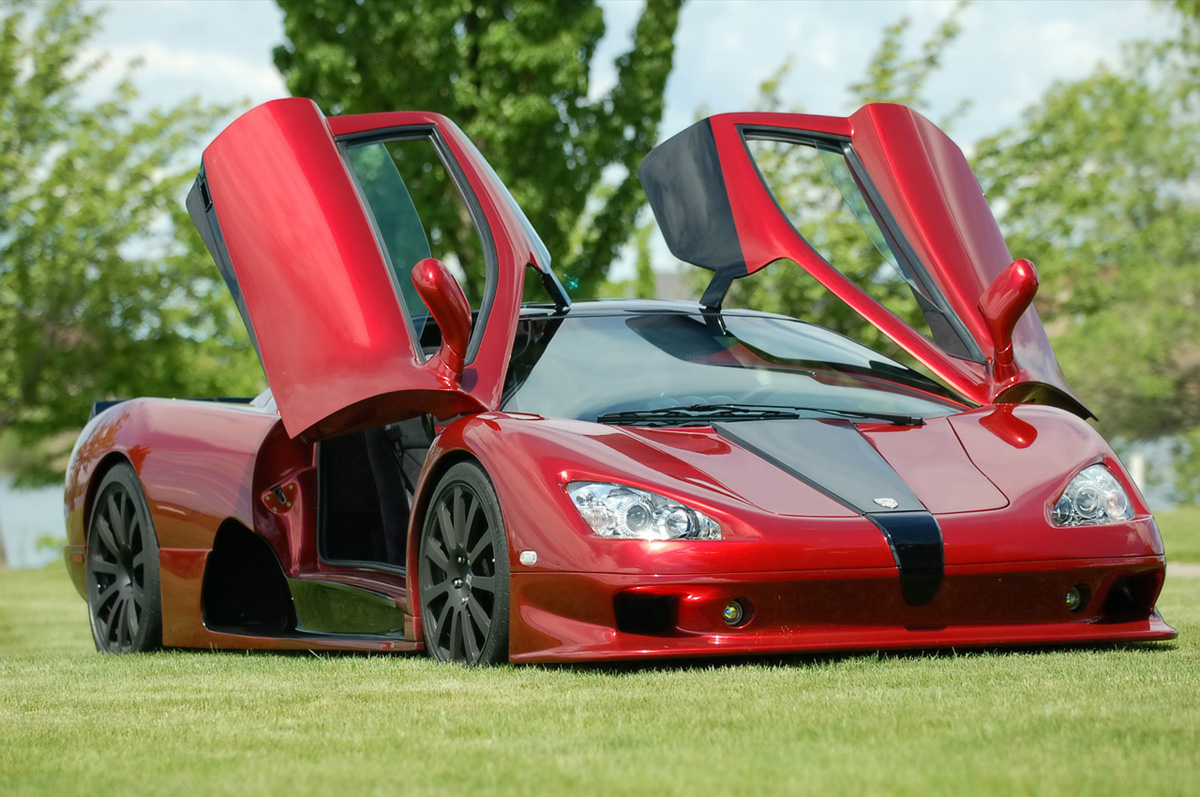
    3. SSC Ultimate Aero: 257 mph, 0-60 in 2.7 secs. Twin-Turbo V8 Engine with 1183 hp, base price is $654,400. Tested in March 2007 by Guinness World Records, The SSC Ultimate Aero was the fastest car in the world from March 2007 to July 2010. On March 2011, the Koenigsegg Agera R also surpassed it, forcing this American made car to the #3 spot.
    SSC Ultimate Aero Red doors open
    4. Saleen S7 Twin-Turbo: 248 mph, 0-60 in 3.2 secs. Twin Turbo All Aluminum V8 Engine with 750 hp, base price is $555,000. Smooth and bad-ass. It will make you want to show it off non-stop.
    Saleen S7 Twin Turbo dark orange front view
    5. Koenigsegg CCX: 245 mph, 0-60 in 3.2 secs. 90 Degree V8 Engine 806 hp, base price is $545,568. Made in Sweden, it is the older brother of the Agera R, only losing to 4 other supercars in the world.
    Orange Koenigsegg CCX
    6. McLaren F1: 240 mph, 0-60 in 3.2 secs. BMW S70/2 60 Degree V12 Engine with 627 hp, base price is $970,000. The fastest car in the 20th century with doors that looks like bat wings. Maybe Batman needs to order one and paint it black 1997 McLaren F1 on the road black
    7. Gumpert Apollo: 224 mph, 0-60 in 3.0 secs, 4.2 liter V8 Engine that houses 650 hp. Base price: $450,000. Gumpert claims that the Apollo was designed such that it could drive upside-down in a tunnel with speeds at 190 mph or above. Of course, no one has tested this yet.
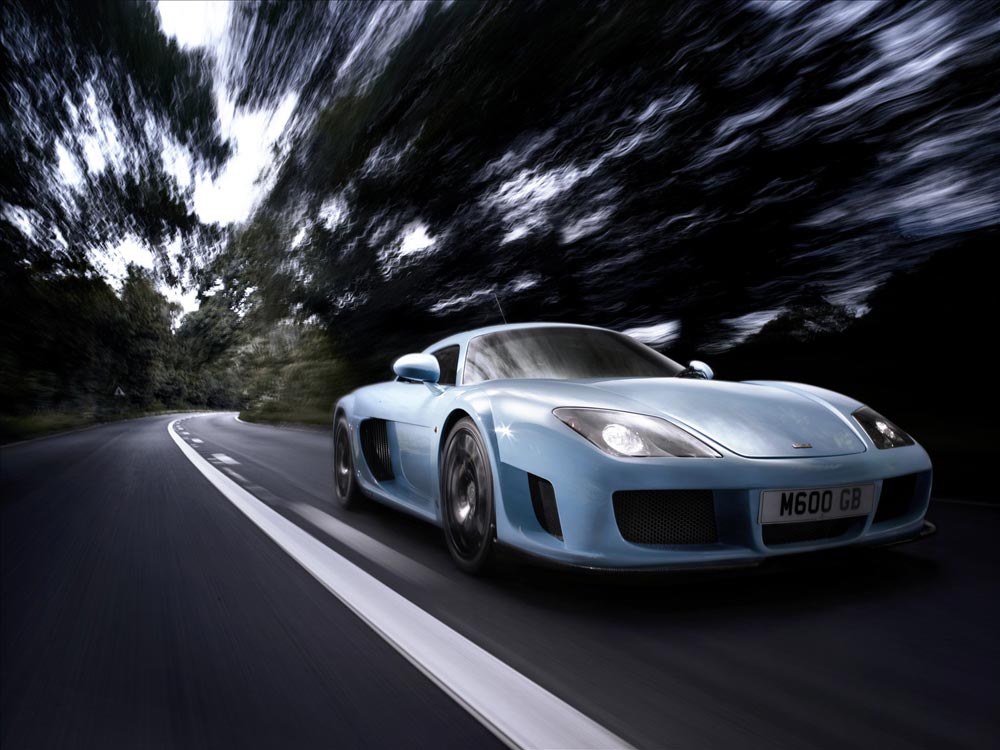
    8. Noble M600: 223 mph, 0-60 in 3.7 secs. Twin-turbocharged 4.4-liter V8 Engine with 650 hp. Base price is $330,000. The Noble M600 also happens to be a very cool car. Its inconspicuous design sports a slender and contoured body which does not scream out for attention at every second of the day.
    We have a tie for 9th and 10th places:
    9. Pagani Zonda Cinque Roadster: 217 mph, 0-60 in 3.4 secs. Twin turbocharged AMG V12 engine that produces 678 hp. Base price is $1,850,000. The Pagani Zonda Cinque Roadster is a limited-edition, with five ever produced. It is the quintessential exotic and exclusive supercar.
    9. Ferrari Enzo: 217 mph, 0-60 in 3.4 secs. F140 Aluminum V12 Engine with 660 hp, base price is $670,000. Only 399 were ever produced; the price goes up every time someone crashes.Ferrari Enzo doors open front view
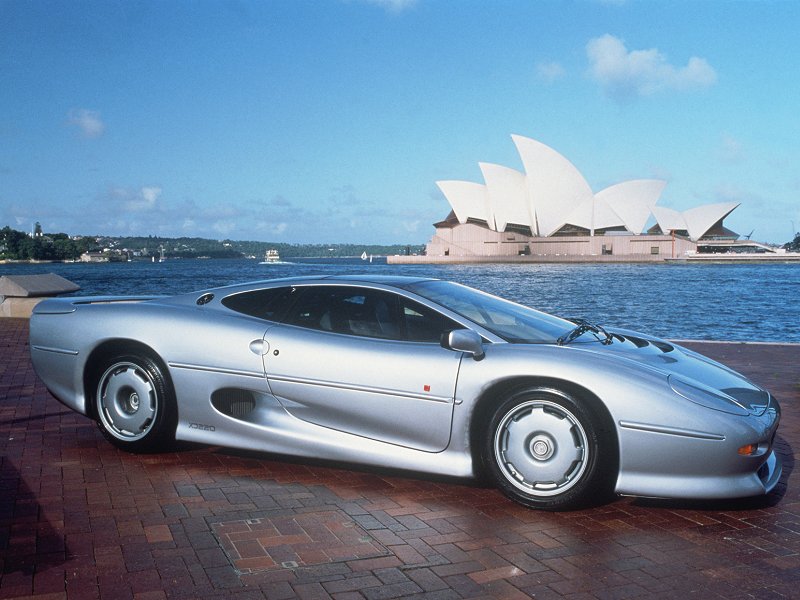
    9. Jaguar XJ220: 217 mph, 0-60 in 3.8 secs. Twin Turbo V6 Engine with 542 hp, base price was $650,000. Made in 1992, this car still has what it takes to make the list.
    Jaguar XJ220
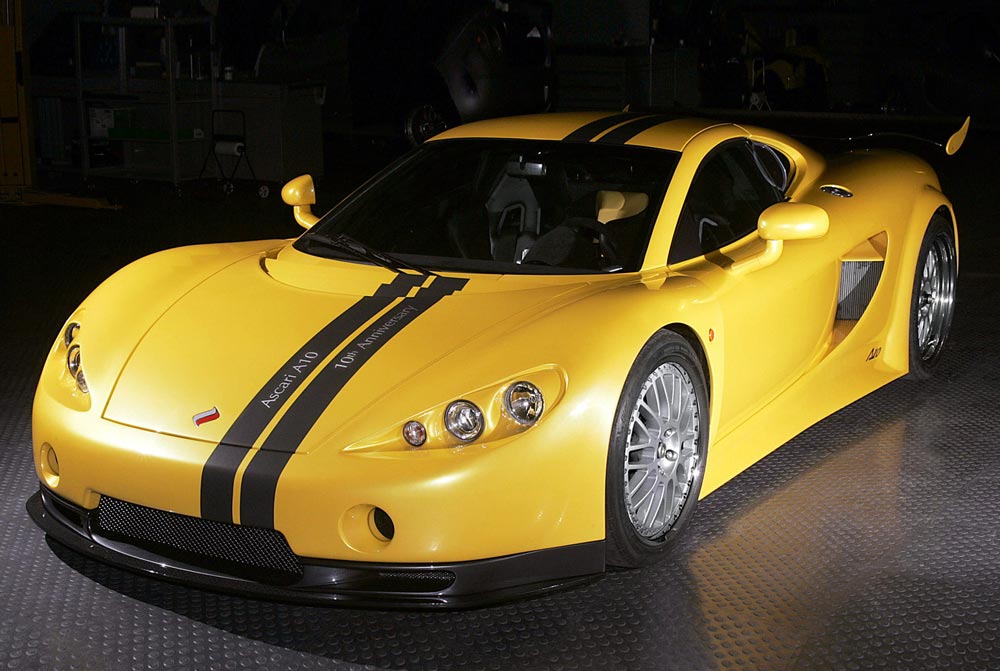
    10. Ascari A10: 215 mph, 0-60 in 2.8 secs. 5.0 litre BMW V8 S62 Engine with 625 hp. Base price: $650,000. The company planned to produce 50 of these supercars at its factory in Banbury, England.
    10. Pagani Zonda F: 215 mph, 0-60 in 3.5 secs. Mercedes Benz M180 V12 Engine with 650 hp, base price is $667,321. With a V12 motor, this baby can do much better.

    pagani zonda f
    Source : thesupercars.org

    BMW i8 Concept - New Car 2011

    It’s been nearly two years since BMW’s Vision EfficientDynamics concept debuted at the 2009 Frankfurt show, and the car has now officially re-emerged one step closer to production as the BMW i8 concept. As you can see, little has changed in the styling department. In fact, other than a new wheel design, the only other notable change we’ve spotted concerns the doors, which seem to have claimed some territory along their bottoms and thereby reduced the size of the blue body-side accent. Interestingly, the car didn’t show that change when BMW paraded it around for spy photographers this past March, but we like it.
    Passenger Compartment + Powertrain = LifeDrive
    As with the i3 city car concept that debuted at the same time , the story of the i8 begins with its LifeDrive architecture. BMW says that its experiences in creating the Mini E and 1-series-based BMW ActiveE showed that adapting cars engineered for internal-combustion power to electric propulsion results in a lot of excess weight and compromises in packaging. As a result, both the i8 and i3 are built using two purpose-built modules: one to house passengers, dubbed “Life,” and one for propulsion and suspension components, called “Drive.” Combine them, and you have a car—and marketing-friendly “LifeDrive” branding.
    While the i3 and i8 share the LifeDrive architectural philosophy, the cars differ in execution. That’s because the i3 is fully electric, while this i8 is a plug-in hybrid, so its Drive component is actually split in two, with an electric motor at the front axle and a gas engine at the rear. Unlike the i3, which situates its batteries below the passenger compartment, the i8’s lithium-ion cells are actually part of the Life module, stacked through a central tunnel that might house a transmission and driveshaft in a conventional car. Arranging them this way allowed BMW’s engineers to achieve yet another claim of perfect 50/50 weight distribution, thereby preserving peace in the city of Munich. As in the i3, the i8’s Drive components are largely crafted of aluminum, while the life module uses a carbon-fiber-reinforced plastic monocoque. Using so much lightweight material essentially cancels out the added weight of the heavy electric drive components, thereby allowing the car to weigh less than 3300 pounds, according to BMW. The rigidity imparted by the carbon fiber also allows for long, dramatic doors that ease access to the two small rear seats, and is a boon to crashworthiness, too.


    While most other so-called “through-the-road” hybrids (meaning the propulsion systems each drive their own axle) are based on existing front-drive vehicles—meaning they add electric power to the rear wheels—BMW had the luxury of starting from scratch. Because most braking energy gathers at the front of the vehicle, the i8 has its electric motor up front for the sake of recapturing energy. The motor is shared with the i3, and its peak output is 170 hp and 184 lb-ft or torque. It’s fed juice, of course, by those lithium-ions, which take about two hours to charge and return 20 miles of all-electric driving.
    Three’s Company: 220-Horse Three-Cylinder
    The original Vision EfficientDynamics concept used a three-cylinder turbo-diesel engine, but the i8 makes use of BMW’s new gas-fired 1.5-liter turbo three-cylinder, which we first reported on in April. It makes 220 hp and 221 lb-ft of torque, helping the i8 to its governed top speed of 155 mph. The run to 60 mph will come in under five seconds, says BMW, who also claims the i8 will return 78 mpg on the European cycle. But that test is notoriously optimistic, and the company says normal driving will realistically result in economy of just half that figure. The engine and electric motor can power the car on their own or in tandem for better traction, with the stability-control system’s whims playing a large part in deciding when to team them up. Each axle also contributes regenerative electricity; the front houses the regenerative braking system, while the engine at the rear has a high-voltage alternator that can recapture energy. No mention was made regarding what type of transmission is installed in the i8.
    A button-activated “Eco Pro” mode dulls throttle response, caps speed between 56 and 74 mph, and reduces the load of the climate-control system. (Because the climate-control system also is responsible for keeping the batteries at an operating temperature of 68 degrees, it always runs to some extent, however.) The i8 also features an intelligent navigation system that can decide the most energy-efficient route to a destination.


    What i Looks Like
    While not much has changed about the i8’s styling, a few themes have emerged now that it has a sibling in the i3. The laying of white panels over a black and clear sub-layer is meant to reference the car’s Life and Drive components. Besides just looking flat-out futuristic, BMW i models will be marked by a BMW roundel with a blue ring around the outside, blue accents on the grilles and side sills, and the “stream flow” C-pillar treatment.
    Inside, the i8 concept foregoes traditional gauges in exchange for a more future-tech 8.8-inch display screen for reporting road and engine speed, as well as battery and fuel levels. In Eco Pro mode, the digital gauges glow blue; in Sport mode—details of which were in short supply—they glow orange. A second screen tops the dash above the center stack to display navigation and infotainment functions, and the rest of the interior is clean and simple.
    Yes, the i8 is technically a concept, although in typical BMW fashion, it’s pretty well fleshed out and likely very close to what you’ll see when the production car launches in 2014. While the diminutive i3 is certainly intended to capture the attention of the general public, the i8 appears to be an effort to keep enthusiasts under the BMW umbrella as sustainability and efficiency become increasingly important. While it remains to be seen if the i8 will be satisfying to pilot, we applaud the idea, since there’s not much that we want to see more than a long future for driver’s cars.Source : Caranddriver.com

    Wednesday, July 27, 2011

    2012 Maserati GranTurismo Convertible Sport - First Drive Review

    It was a peaceful and elegant scene, the bright sunlight glinting off the top-down Maserati GranTurismo convertibles parked on the Piazza dell'Unità d'Italia in Trieste. Passersby admired the gorgeous cars, one of Pininfarina’s masterpieces. Then a legion of uprated 4.7-liter V-8s ignited with a snarl, and peace and elegance were the last things on our mind.
    About that wonderful engine, fitted in the top-spec GranTurismo Convertible Sport. Purists still lament the fact that Maseratis, which were long defined by powerplants that developed peak power at low rpm, are now equipped with high-revving buzzsaws bought from its former arch-rival, Ferrari. But the GranTurismo Convertible Sport's 444-hp variation of the 4.7-liter V-8 is sure to create a few converts.
    It’s an evolution of the regular GranTurismo convertible’s 433-horse 4.7-liter with less internal friction thanks to a revised oil sump and slipperier coatings for the valve tappets and cam lobes; this upgraded version also powers the GranTurismo MC Stradale coupe. Compared to its lesser sibling, the droptop Sport exhales through a freer-flowing exhaust, the main purpose of which seems to be to create as much beautiful noise as is legally allowed. It’s aided in that pursuit by active valves that open at 2500 rpm when the transmission is in its Automatic Sport mode. We predict the V-8 will haul the 4600-pound droptop to 60 in 4.8 seconds.


    Fantastico Automatico
    As in the U.S.-market MC Stradale and the Quattroporte Sport GT S, power flows through a six-speed, torque-converter automatic supplied by ZF. But don’t lament the fact that there’s no hard-core gearbox; the automatic has been extensively reworked for duty here, and offers Normal and Manual Sport modes in addition to the aforementioned Automatic Sport, as well as launch control. Gearshift times are improved by up to 50 percent, it blips the throttle for downshifts, and, in Manual Sport mode, it doesn’t downshift when you hit the kickdown switch or upshift unless you tell it to. There’s more: You can call for a lower gear if there’s any leeway whatsoever before redline (most transmissions won’t let you downshift unless the resulting engine speed is farther down the tach from redline) and the exhaust flaps are always open in Manual Sport. This automatic is so good that you'll hardly miss a dual-clutch transmission—or the Euro-market MC’s single-clutch automated manual. Of course, you might miss a proper clutch-pedal manual gearbox, but Maserati doesn't offer one anymore.
    Chassis Changes, Too
    Underneath, the front and rear springs and anti-roll bars are stiffer on this derivative, the dampers are modified, and the ZF Sachs–sourced "Skyhook" damping system has been re-tuned. On twisting roads, the Sport handles well and generally does what you ask of it, but there’s simply no masking the car’s two-ton-plus weight or its somewhat uncommunicative steering. The body flexes more than it should, too. To be sure, the GranTurismo Convertible Sport is an enjoyable companion in nearly every situation, but it’s less full-bore sporty than its sinister looks and capital-S “Sport” badge might let on. So when a well-driven Audi R8 Spyder closes in on you from behind, our advice is to just let it pass. Take solace in the fact that the Audi will never sound as glorious as the Maserati, or seat four as comfortably (or at all).
    There are a number of competitors: BMW's new 6-series droptop, the soon-to-be-new Mercedes-Benz SL, the Porsche 911 cabriolet, the Audi R8 Spyder, and, of course, the Jaguar XK and its distant cousin, the Aston Martin V-8 Vantage roadster. The Maserati acquits itself well by informal comparison: It’s more spacious than most (even if the trunk is tiny), it’s not outrageously expensive by the standards of the segment, it offers incredibly luxurious accommodations, and it just might have more character than the whole bunch combined. Those qualities ought to satisfy most anyone—trident purists included.
     
    Source : Caranddriver.com